







Key Takeaways
Puppies are commonly infected with roundworms, which can be transmitted before birth, through nursing, or by ingesting larvae.
Roundworms can cause malnourishment, poor growth, and other health issues in puppies, and they pose risks to humans.
Regular deworming and proper sanitation are essential to protect both dogs and humans from roundworm infections.
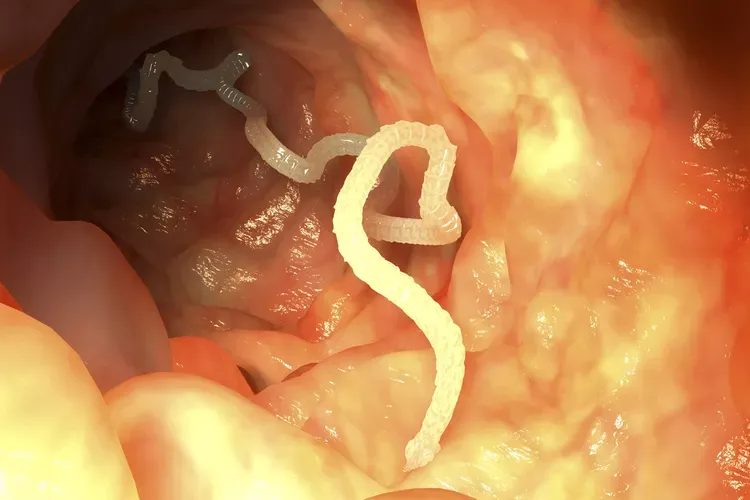
Roundworms are one of the most common intestinal parasites of puppies.1 Even puppies that come from pristine kennels and environments often have roundworms, because they are found in almost all puppies at birth.2 There are several types of roundworms, technically called nematodes, but the species Toxocara canis most commonly affects dogs. Roundworms are passed in the stool or vomited and look like masses of spaghetti.
How Roundworms Are Transmitted
Dogs can become infected in four different ways. Puppies may be infected before they are born when immature worms the mom-dog harbors migrate to the uterus. Puppies may also contract roundworms from nursing the mother's infected milk. The parasite can also be contracted when a puppy or adult dog swallows infectious larvae found in the environment or by eating an infected host like a mouse or bird.2
Roundworm Life Cycle
When a puppy swallows infectious eggs, the larvae that hatch in the intestines later migrate to the liver and lungs. They are coughed up and swallowed again, and then they mature once they return to the intestines.1
The parasites grow into one to 13-inch-long adult worms. Mature females can lay 200,000 eggs in a single day, which pass with the stool and can live in the environment for months to years. Eggs hatch into infectious larvae, completing the cycle.
Older dogs that swallow infectious larvae are more resistant to the worms.1 Their immune system tends to arrest the worm's development. Such larvae simply stop developing and remain wherever they happen to alight. In other words, they can lodge in various places in their body's like the pet's muscles, kidneys, brain, or even the eyes.
But during the period around the birth of a litter, the immunity of the female dog to infection is partially suppressed. Immature roundworms begin again to migrate and typically cross into the placenta or the mammary glands to infect the puppies before or shortly after birth.
Roundworm Symptoms and Complications
Roundworms are rarely life-threatening, but massive infestations may cause intestinal damage and, rarely, cause a bowel obstruction or rupture. More commonly, roundworms interfere with the absorption of puppy food.2 The adult worms live in your dog's intestinal tract where they eat the partially digested food meant for your dog. This can lead to malnourishment in a small puppy, and your dog may show weakness, weight loss, and reduced growth.2
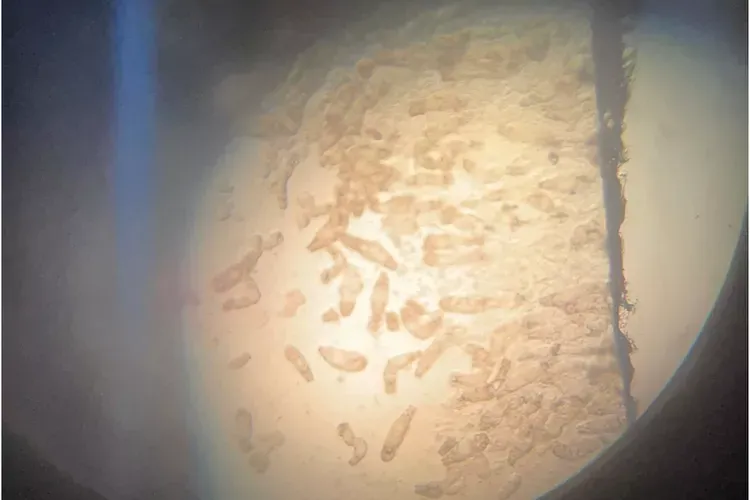
Puppies with roundworms often have a potbellied appearance.2 They may also develop a dull coat since the worms take away nutrients that keep the coat looking healthy. Heavy worm loads can cause diarrhea or mucus in the stool.1 Puppy owners sometimes see the worms when they see the spaghetti-like masses passed in the stool or vomited. Your veterinarian can diagnose roundworms by examining a sample of the puppy’s stool under the microscope and finding the immature eggs, which confirms adult worms are present in the intestines.

Treating Roundworms
Veterinarians usually prescribe medication for roundworms as a matter of course. These treatments are considered safe even in quite young puppies. Many heartworm preventatives also protect against roundworms. This is important because roundworms can also affect children.
Children at Risk of Roundworms
Children may be at risk for infection with T. canis, primarily from accidentally ingesting infectious stages of the worm. This most commonly occurs when the kids taste or eat contaminated dirt.3
The parasite causes a disease in humans called "visceral larva migrans," in which immature worms never reach maturity but simply migrate throughout the body. Symptoms include fever, anemia, liver enlargement, pneumonia, and other problems.4
Preventing the Spread of Roundworms
Because of this human risk, the Centers for Disease Control (CDC) recommends that all puppies and their mothers undergo deworming treatments, whether diagnosed with the parasite or not.5 Your veterinarian can provide a dewormer that is safe and effective to use.
These precautions, along with simple sanitation procedures, will protect both puppies and human family members from roundworms. Clean up feces from the puppy's yard at least once a week, and prevent young children from playing in the dog's "toilet area."






Leave a Reply
Your email address will not be published.