California’s Hidden Charge: The New Battery Fee Revolutionizing Recycling
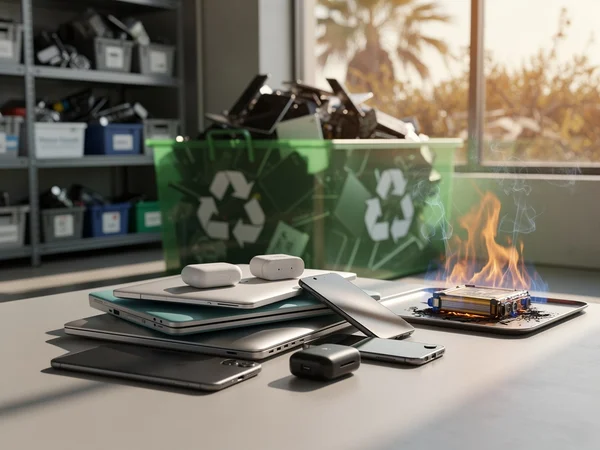
In the early days of 2026, California consumers began noticing an unexpected addition to their receipts when purchasing everyday gadgets. A new fee, quietly implemented on January 1, targets products with embedded, non-removable batteries, from high-end gaming consoles like PlayStations to utilitarian power tools and even whimsical singing greeting cards. This surcharge, capped at $15 per item and calculated at 1.5% of the purchase price, expands an existing electronic waste recycling program that has been in place for decades. But as shoppers grapple with the extra cost, questions arise about its effectiveness in addressing a growing environmental hazard: lithium-ion battery fires in recycling facilities.
The impetus for this fee stems from a surge in incidents where discarded batteries have caused explosions and fires at waste management sites. According to reports from environmental advocates and state regulators, these batteries, often hidden within consumer products, are improperly disposed of, leading to dangerous situations for workers and facilities. The California Department of Toxic Substances Control has documented numerous cases where lithium-ion batteries, which power everything from cordless drills to musical cards, ignite when crushed or punctured during recycling processes. This new measure aims to fund safer collection, transportation, and recycling methods, building on a program that originally focused on computer monitors and televisions since 2003.
Advertisement
article-ad-01Industry observers note that the fee is part of California’s broader push toward sustainable waste management, especially as the state accelerates its transition to renewable energy and electric vehicles. By imposing this cost at the point of sale, policymakers hope to incentivize manufacturers to design products with easier-to-recycle batteries or to participate more actively in take-back programs. However, critics argue that it simply passes the buck to consumers without guaranteeing meaningful improvements in recycling infrastructure.
Origins and Mechanics of the Fee
The legislation enabling this fee, signed into law by Governor Gavin Newsom, extends the state’s Product Stewardship program to cover a wider array of battery-containing items. As detailed in an article from CalMatters , the fee is designed to generate revenue for specialized recycling efforts, potentially raising millions annually to handle the increasing volume of lithium-ion waste. Unlike previous iterations that targeted larger electronics, this expansion includes smaller, often overlooked items like singing cards, which contain tiny button-cell batteries that pose fire risks when mixed with regular trash.
Mechanically, the fee is straightforward: retailers collect it at checkout and remit it to the state, which then allocates funds to certified recyclers. The cap at $15 ensures that high-value items don’t incur exorbitant charges, but for budget-conscious buyers, even a small percentage adds up. For instance, a $500 PlayStation would incur a $7.50 fee, while a $20 power tool might add just 30 cents. Proponents, including environmental groups like Earthjustice quoted in the same CalMatters piece, emphasize that this approach encourages “extended producer responsibility,” where companies bear more of the end-of-life costs for their products.
Yet, implementation hasn’t been without hiccups. Retailers have had to update point-of-sale systems to identify qualifying products, leading to initial confusion. Some businesses, particularly small ones, report challenges in distinguishing between removable and non-removable batteries, potentially leading to over- or under-collection. State officials have provided guidelines, but as the program rolls out, monitoring compliance will be key to its success.
Environmental Imperatives Driving Change
At the heart of this policy is the escalating problem of battery-related fires, which have plagued recycling centers across California. News outlets like the Los Angeles Times have highlighted how these incidents not only endanger workers but also release toxic fumes, undermining the state’s clean air goals. With California leading the nation in electric vehicle adoption and renewable energy initiatives, the volume of lithium-ion batteries entering the waste stream is projected to skyrocket, making proactive measures essential.
Environmental scientists point out that improper disposal contributes to broader ecological harm, including soil and water contamination from heavy metals like cobalt and nickel. The fee’s funds are earmarked for advanced recycling technologies that can safely extract these materials for reuse, potentially reducing the need for new mining operations. As Meg Slattery from Earthjustice noted in coverage by SFGATE , thinking through the full lifecycle of batteries is crucial as society shifts away from fossil fuels.
Moreover, this initiative aligns with California’s ambitious climate targets, such as achieving carbon neutrality by 2045. By addressing battery waste, the state aims to close the loop on a circular economy, where materials are reused rather than discarded. However, skeptics question whether the fee will sufficiently scale up recycling capacity, given the current infrastructure’s limitations in handling the diverse array of battery types.
Industry Reactions and Economic Ripples
Manufacturers of affected products have voiced mixed reactions. Tech giants like Sony, producer of PlayStations, face added pressure to innovate in battery design, potentially incorporating more recyclable components to mitigate future fees. Power tool makers, such as those from DeWalt or Milwaukee, are exploring modular designs where batteries can be easily removed and recycled separately, which could exempt products from the fee. Meanwhile, the greeting card industry, represented by companies like Hallmark, finds itself unexpectedly in the regulatory spotlight, as singing cards with embedded batteries now carry the surcharge.
Economic analyses suggest the fee could influence pricing strategies. A report from LAist indicates that while the direct cost to consumers is modest, it might prompt some to delay purchases or seek alternatives, potentially slowing sales in certain sectors. Retailers, already navigating post-pandemic supply chains, worry about administrative burdens, with some passing on additional costs indirectly through higher base prices.
From an insider perspective, supply chain experts anticipate shifts in sourcing. Companies may prioritize suppliers offering compliant, eco-friendly batteries to avoid fee-related markups. This could spur innovation in battery technology, such as solid-state alternatives that are safer and more recyclable, though widespread adoption remains years away.
Broader Policy Context and Comparisons
California’s battery fee doesn’t exist in isolation; it’s part of a tapestry of environmental regulations that have positioned the state as a leader in sustainability. For comparison, the state’s ban on gas-powered lawn equipment starting in 2024, as reported in posts on X from sources like the Los Angeles Times, aimed to curb emissions from small engines, similarly transitioning to battery-powered options. That move, while controversial, has reduced air pollution, setting a precedent for battery-focused policies.
Nationally, other states are watching closely. Oregon and Washington have implemented similar extended producer responsibility laws for electronics, but California’s inclusion of small items like singing cards sets a new benchmark. Federally, the Environmental Protection Agency has encouraged battery recycling through grants, but lacks the mandatory fees seen in California. This state-level action could influence national standards, especially as lithium demand surges for electric vehicles.
Critics, including some business groups, argue that the fee exacerbates California’s high cost of living, echoing sentiments in X posts from figures like Joel Pollak, who highlighted affordability concerns amid Governor Newsom’s policies. They contend that without transparent tracking of how funds are used, the fee risks becoming just another tax, rather than a targeted environmental tool.
Challenges in Implementation and Enforcement
As the fee takes hold, enforcement emerges as a critical challenge. State agencies must ensure that collected funds are effectively deployed to enhance recycling infrastructure, including fire-suppression systems at facilities and public education campaigns on proper disposal. Early data from the program’s expansion, as covered by GV Wire , suggests initial revenue is meeting projections, but scaling up to handle increased battery volumes will require investment in specialized processing plants.
Consumer awareness is another hurdle. Many buyers remain unaware of the fee’s purpose, leading to frustration at checkout. Advocacy groups are pushing for better labeling on products, informing purchasers about the environmental rationale and how to recycle items responsibly. Retail giants like Best Buy and Home Depot have begun offering in-store battery drop-offs, potentially easing the burden.
Looking ahead, potential legal challenges loom. Industry associations might contest the fee’s scope, arguing it unfairly targets certain products. If successful, such disputes could narrow the program’s reach, limiting its impact on battery waste reduction.
Future Prospects and Global Echoes
Projecting forward, the fee could evolve to include more products or adjust rates based on recycling success metrics. California’s experience may inspire international models; the European Union already mandates battery collection targets, and similar fees in countries like Germany fund robust recycling networks. As global lithium supplies strain under EV demand, efficient recycling becomes imperative to avoid shortages.
Technological advancements could complement the policy. Innovations in battery chemistry, such as sodium-ion alternatives, promise reduced fire risks and easier recycling, potentially diminishing the need for such fees over time. Industry insiders speculate that by 2030, integrated recycling could become standard, turning waste into a resource stream.
Ultimately, the fee’s legacy will depend on measurable outcomes: fewer fires, higher recycling rates, and a more sustainable approach to consumer electronics. As California navigates this path, it sets an example for balancing environmental stewardship with economic realities, urging other regions to follow suit in managing the byproducts of our battery-powered world.

LEAVE A REPLY
Your email address will not be published