Can Kittens Eat Adult Cat Food?

Can Kittens Eat Adult Cat Food?

In simple terms, yes, kittens can eat adult cat food. However, that doesn’t mean they should. A growing kitten requires a much more nutrient-rich diet than adult cats to support their rapid growth, ensure optimal development of organs, bones and muscles, and to build up their immune systems.

Posted on: by Lara Hew
How to Care for Your Cat’s Ears

How to Care for Your Cat’s Ears

As a pet owner, it’s your responsibility to maintain and keep track of your pet’s health, both inside and out, but even with regular health checks, some things can easily be missed, especially when there are no obvious signs of a problem. When it comes to cats, one of the most common missed issues is with their ears, partly because they’re not a fan of sitting still long enough for you to properly check, and also because they are very good at hiding when something is wrong.

Posted on: by Peyton Shine
How To Keep Your Cat Warm in Winter

How To Keep Your Cat Warm in Winter

As the temperature continues to drop and the winter weather creeps in, we all find ourselves reaching for that extra jumper or warm drink to help stave off the chill. But what about our feline friends?

Posted on: by Tiffany Salmon
How to Cat Proof Your Home

How to Cat Proof Your Home

Whether you’re preparing to bring home your newest family member or you’re considering getting a cat in the future, it’s important to know how to prepare your home to make it suitable for a cat. Cats are curious by nature and love to explore their environment, whether it’s indoors or out. However, like most pets, cats don’t have a sense of what is dangerous to their health or well-being, especially when it comes to everyday items that you might not even think of as a hazard.

Posted on: by Hannah Clark
Bringing Home a New Cat

Bringing Home a New Cat

Whether you’ve decided to rescue, have gone through a breeder, or have found yourself opening your home to a cat for any other reason, there are a lot of things you need to consider when welcoming a new cat into your home. In this article, we’ll take you through the key things you need to remember when the time comes to bring your new bundle of fluff into your family so they can settle in properly and feel at ease in their new home.

Posted on: by Dana Minacapelli
Is it Cruel to Keep a Cat Indoors?

Is it Cruel to Keep a Cat Indoors?

One of the choices a new cat owner needs to make is whether or not they’re going to allow their cat to free roam outside of the home. While many people think this is a simple decision, there are actually a few reasons why an owner might keep their cat indoors.

Posted on: by Dana Minacapelli
What is FIV in Cats?

What is FIV in Cats?

There is a lot of confusion around FIV in cats, with many owners believing it to be the feline equivalent of AIDs in humans. This, however, is a myth. In this blog, we’re going to explain what FIV is, how you can spot it, and what you can do to care for cats positive for FIV.

Posted on: by Lizzie Youens
The Complete Buyers Guide to the Best Cat Litter

The Complete Buyers Guide to the Best Cat Litter

Any cat owner will tell you that not all cat litters are made equal, and with cats being finicky animals at the best of times, choosing the wrong litter could be the difference between them using the litter tray or ignoring it entirely.

Posted on: by Dana Minacapelli
Do Cats Drink Water?

Do Cats Drink Water?

Water is one of the foundations of life, and very few living things can survive for long without it, including cats. This can make it concerning if it looks like your cat isn’t drinking, but it’s important to remember that cats do drink water and should always have access to fresh, clean water at all times.

Posted on: by Lizzie Youens
How to Care for a Deaf Cat

How to Care for a Deaf Cat

Nobody’s perfect, and just like humans, animals can either be born with or develop a wide range of disabilities and conditions throughout their lifetime. That doesn’t mean they don’t have a whole lot of love to give, though!

Posted on: by Hannah Clark

How to Keep Cats Cool in Hot Weather

Dana Minacapelli | 2026-04-01

Summer is here, and you’re undoubtedly getting ready for well-lit nights spent in the garden or sunny Sundays with the family. But with that sunshine comes rising temperatures that even we struggle to deal with as the UK enters some of its longest heatwaves to date. And if you’re struggling to stay cool, how do you think your cat is doing?

During a heatwave, your cat can easily become dehydrated or suffer from heatstroke, both of which can have dire consequences on your cat’s health. That’s why we’re here to talk you through how to keep your cat cool this summer. 

How Do Cats Keep Themselves Cool?

Like humans, cats use a “sweating” method to keep themselves cool in warmer temperatures, but cats cannot produce that sweat themselves. Instead, a cat will lick itself all over and leave the saliva to evaporate, creating a sweating effect. 

Cats are also masters at finding the perfect shady spot to hide away when the temperature gets too hot. You may also notice your cat begin to pant when the temperature gets too warm, much like a dog does. 

However, if you notice your cat is panting or breathing rapidly, contact your vet as soon as possible. Panting and rapid breathing are key signs of heatstroke in cats, which, left untreated, can have dire consequences, including death. 

So what can you do about it? 
How to Keep Your Cat Cool in Summer

Despite your cat’s love for warmth and sunlight, it doesn’t take much for them to overheat. Any temperature above 38° is too hot for your cat, and with British summers now reaching as high as 40.3°C, it’s very important to know how you can help your cat cool down when it gets too hot. 

Some of the ways you can help keep your cat cool include: 

  • Providing your cat with plenty of fresh water

  • Providing plenty of shaded, cool areas for your cat to relax in

  • Regularly brushing your cat to remove any excess fur from their coat

  • Giving them an ice cube to play with on a cool, hard floor

  • Placing a cooling mat in their favourite lounging spot or bed

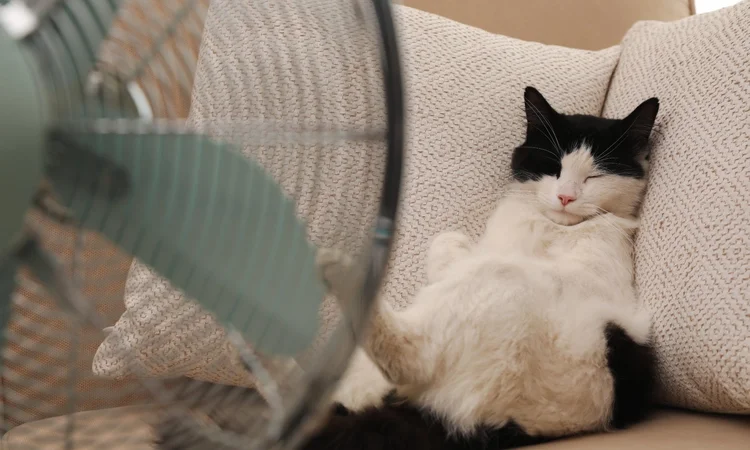
  • Having a fan or air conditioner unit set up near where your cat likes to lie down

  • Avoiding playtime with your cat during the hottest parts of the day

By taking these steps to keep your cat cool, you can ensure they stay happy and healthy throughout the hot summer months.

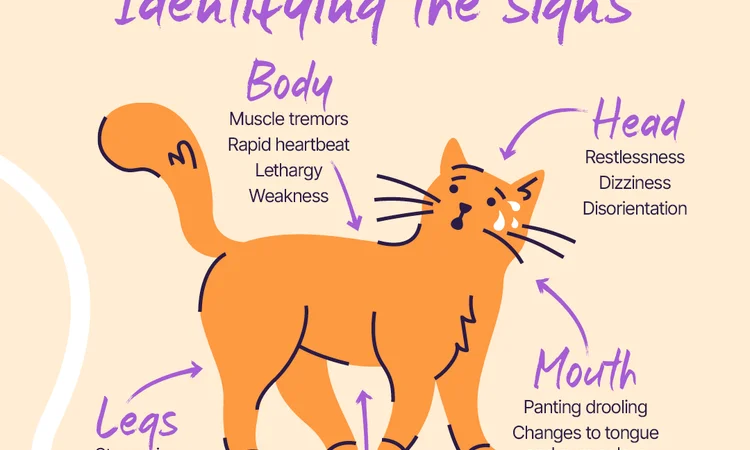
A detailed and illustrative infographic outlining the key signs of heatstroke in cats.A detailed and illustrative infographic outlining the key signs of heatstroke in cats.

Signs of Heatstroke in Cats

Ensuring your cat stays cool in the summer is essential to reduce the risk of heat stroke in cats. Make sure you keep an eye out for the following symptoms of heatstroke in cats: 

  • Heavy panting

  • Drooling 

  • Excessive grooming

  • Redness of tongue 

  • Vomiting 

  • Staggering and weakness

Call your vet immediately if you notice any signs of heatstroke in your cat. You can also place a cool (not cold) damp cloth on your cat’s belly to help it cool down. Always make sure you provide your cat with plenty of fresh water. 

Subscribe Newsletter

Subscribe to our newsletter and stay up to date with the latest news, updates, and exclusive offers. Join our community today!

Comments

Join the discussion and share your thoughts.

No comments yet. Be the first to comment.

Leave a Reply

Your email address will not be published.

Join Us

Share your perspective with confidence. Your experience could inform, inspire, and help someone live better.

Archives

Authors

More ...

Search Pet Paw