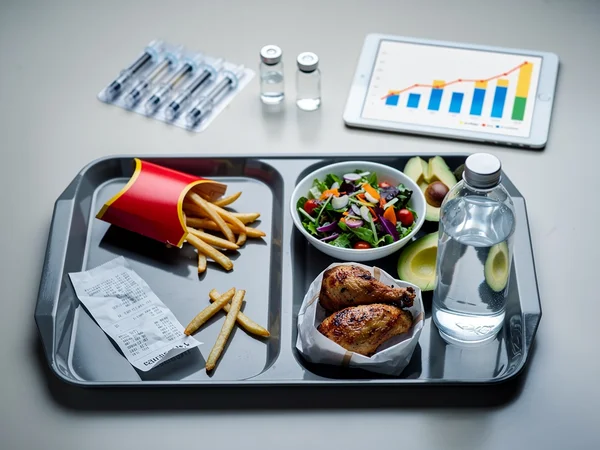
In the bustling world of American dining, a quiet revolution is underway, driven not by culinary innovation or economic shifts, but by a pharmaceutical breakthrough. Drugs like Ozempic, originally developed for diabetes management but now widely used for weight loss, are altering consumer habits in profound ways. Users report diminished cravings for high-calorie, indulgent foods, leading to noticeable drops in spending at quick-service restaurants. This shift is sending ripples through the fast-food sector, prompting chains to rethink menus, portion sizes, and marketing strategies.
Recent studies highlight the scale of this change. A comprehensive analysis from Cornell University, detailed in the Cornell Chronicle , reveals that households with someone on these GLP-1 medications—such as Ozempic or Wegovy—reduce their grocery spending by over 5% within six months. The impact is even more pronounced in dining out, with fast-food expenditures dropping by as much as 8% for higher-income groups. This isn’t just about eating less; it’s about choosing differently, favoring healthier options over the greasy staples that have long defined the industry.
Advertisement
article-ad-01Industry insiders are taking note. Executives at major chains like McDonald’s and Burger King are monitoring these trends closely, as evidenced by investor calls where questions about GLP-1 drugs dominate discussions. The fear is that as more Americans turn to these medications—now prescribed to millions—the core customer base for burgers, fries, and sodas could erode significantly.
Shrinking Orders and Shifting Menus
The mechanics behind this transformation lie in how GLP-1 agonists work. These drugs mimic hormones that signal fullness to the brain, effectively curbing overeating and reducing the allure of ultraprocessed foods. A report from The New York Times explores how this is prompting food companies to innovate, developing products that might counteract these effects or appeal to medicated consumers. For fast-food outlets, this means experimenting with smaller portions, protein-rich items, and even low-calorie alternatives to classic favorites.
Take, for instance, the response from chains adapting their offerings. Some are introducing “Ozempic-friendly” menu items, like salads with added proteins or smaller burger sizes, to retain customers who might otherwise skip the drive-thru altogether. Posts on social media platform X reflect public sentiment, with users noting decreased orders from delivery apps like DoorDash and Uber Eats, attributing it to reduced hunger from the drugs. This anecdotal evidence aligns with broader data, suggesting a potential revenue hit for both restaurants and delivery services.
Moreover, the economic implications extend beyond individual chains. A study by Bain & Company, as reported in Restaurant Business Online , found that GLP-1 users spend 5% less on fast food overall. For an industry that thrives on impulse buys and large portions, this represents a fundamental challenge to business models built on volume and value meals.
Industry Counterstrategies Emerge
Fast-food giants aren’t sitting idle. In response to these trends, companies are investing in research to create foods that can “beat” the appetite-suppressing effects. A piece from Fox News warns that the junk food sector is engineering ultraprocessed items designed to hijack brain reward systems, potentially undermining the drugs’ benefits. This cat-and-mouse game highlights the tension between health advancements and commercial interests.
On the financial front, stock prices for food conglomerates have felt the pressure. Companies like General Mills and Coca-Cola have seen declines, as noted in various market analyses, including discussions on X where investors speculate on long-term impacts. Walmart, a major grocery retailer, has even reported shifts in shopping patterns due to these medications, with less demand for snacks and sweets.
For restaurant operators, adaptation tactics include menu diversification. According to insights from The Independent , about 12% of Americans are now on GLP-1 drugs, influencing how eateries craft their offerings. Chains are adding more nutrient-dense options, such as grilled items or veggie-based sides, to appeal to a clientele focused on wellness rather than indulgence.
Broader Economic Ripples
The effects aren’t confined to the U.S. alone. Internationally, similar patterns are emerging, with Australian beef producers eyeing opportunities in a “GLP-1 premium” market, as covered in Farm Weekly . As consumers eat less processed meat, demand for higher-quality proteins could rise, reshaping agricultural supply chains.
Back home, the data from ScienceDaily underscores steep declines in spending on snack foods and sweets, with fast-food hits being particularly acute. This could lead to job impacts in the sector, as reduced sales might force cutbacks in staffing or store closures. Industry analysts predict that without innovation, some chains could see revenue drops of up to 10% in the coming years.
Personal stories add a human element. Physicians like spine specialists have shared on X how patients on Ozempic are losing significant weight, improving health outcomes and even avoiding surgeries. This medical endorsement boosts the drugs’ popularity, further pressuring the food industry to evolve.
Innovation in Product Development
To combat these challenges, fast-food companies are turning to science. Research into flavors and textures that enhance satisfaction without calories is ramping up. A New Atlas article details how GLP-1 drugs are reducing overall food spending, prompting producers to rethink formulations. For example, some are exploring additives that prolong satiety or make low-calorie options more appealing.
Marketing strategies are also shifting. Novo Nordisk, the maker of Ozempic, has launched campaigns featuring celebrities, as seen in MMM Online , to normalize the drug’s use. This visibility encourages more prescriptions, accelerating the trend.
Meanwhile, smaller chains and independents are finding niches by emphasizing fresh, whole-food menus. This pivot could fragment the market, with health-focused eateries gaining ground over traditional fast-food behemoths.
Long-Term Market Transformations
Looking ahead, the integration of these drugs into everyday life could redefine dining norms. With projections from CNN Business indicating sustained growth in semaglutide prescriptions, food sellers are bracing for a new reality where portion control becomes king. The CNN Business report from earlier years foreshadowed this, noting early questions about eating habit shifts.
Investor sentiment on platforms like X reflects optimism for adaptive companies. Posts discuss how firms engineering “Ozempic-proof” snacks might thrive, while others warn of diabolical tactics by big food to maintain addiction-like consumption patterns.
For the fast-food industry, this era demands agility. Chains that successfully blend indulgence with health consciousness may emerge stronger, while laggards risk obsolescence in a world where appetite is no longer insatiable.
Consumer Behavior Under the Microscope
Delving deeper into consumer data, patterns show that the spending cuts are most evident in impulse categories. High-income users, according to Cornell’s findings, exhibit the sharpest declines, suggesting that discretionary dining is hit hardest. This demographic shift could widen inequalities in the sector, with premium chains faring better than budget ones.
Educational institutions like the Institute of Culinary Education are advising on tactics to curb losses, such as dynamic pricing or loyalty programs tailored to smaller appetites. Their insights, shared on X, emphasize adapting to whims in hospitality, including reduced check averages due to Ozempic.
Critics argue that this pharmaceutical intervention exposes deeper issues in food systems, where overconsumption has been engineered for profit. As more studies emerge, the dialogue between health, commerce, and consumer choice intensifies.
Global Perspectives and Future Trajectories
Internationally, the beef industry in places like Australia is positioning itself advantageously, capitalizing on demand for lean proteins. This global angle adds layers to the narrative, showing how one drug class can influence trade and agriculture worldwide.
In the U.S., ongoing research from Bain & Company continues to track these trends, providing benchmarks for industry response. As more Americans embrace these medications—potentially reaching 20% adoption in the next decade—the fast-food sector must innovate or face contraction.
Ultimately, this shake-up underscores a pivotal moment: where medical advancements challenge entrenched business models, forcing a reevaluation of what it means to feed a nation increasingly focused on health over hedonism. The path forward will likely involve hybrid approaches, blending technology, nutrition, and marketing to sustain relevance in an era of suppressed appetites.

LEAVE A REPLY
Your email address will not be published