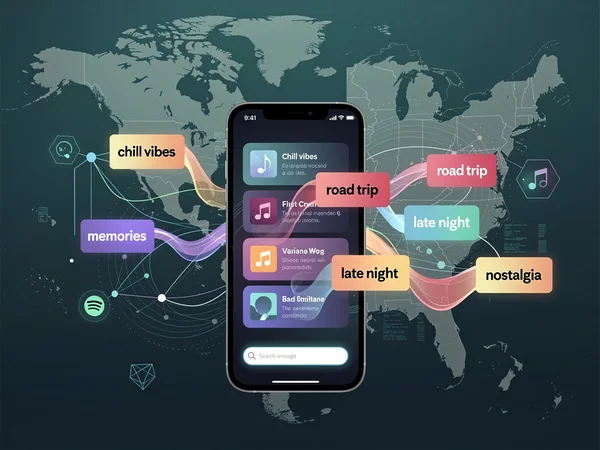
Spotify Technology SA rolled out its artificial intelligence-powered “prompted playlist” feature to premium subscribers in the U.S. and Canada on Thursday, marking a pivotal shift in how the world’s largest music streamer engages its 250 million-plus paying users. The tool lets listeners craft personalized playlists by typing natural language prompts—such as “songs that feel like driving through the mountains at sunset”—drawing on their listening history, Spotify’s vast catalog and real-time data. This expansion follows a beta test in New Zealand and builds on months of anticipation after initial announcements late last year.
“Listeners don’t just want Spotify to understand them. They want to actively shape their own experience,” said Molly Holder, Spotify’s vice president of product personalization, during a media briefing. The feature positions users as directors of the algorithm, blending their words with machine learning models trained on billions of listening sessions. Premium users in the two countries can now access it directly in the app’s search bar, with playlists generating in seconds and refreshing daily or weekly based on user preferences.
Advertisement
article-ad-01Early feedback from testers highlights the tool’s ability to surface obscure tracks tied to emotions or memories, going beyond genre-based recommendations. Spotify executives emphasized that prompted playlists factor in a user’s full listening history from day one, incorporating world knowledge like seasonal vibes or cultural references.
From Beta Test to Major Markets
The rollout comes after a successful limited beta in New Zealand, where users praised the feature’s precision in capturing nuanced moods. Spotify’s newsroom detailed how co-president and chief product officer Gustav Söderström envisions this as a new era of listener control, allowing prompts like “upbeat tracks for a rainy commute” or “nostalgic ’90s hip-hop for workouts.” TechCrunch reported in December that the playlists could pull from a user’s entire history, refreshing dynamically to keep recommendations fresh.
Reuters confirmed the U.S. and Canada launch on January 22, noting the feature’s reliance on premium-tier access to maintain Spotify’s monetization strategy amid fierce competition from Apple Music and YouTube Music. Reuters quoted Spotify stating the tool tailors playlists using listening habits and user commands, a direct response to demands for more agency in discovery.
CNBC highlighted how prompts can evoke specific feelings or memories, such as “playlists for late-night introspection,” with the AI synthesizing results from Spotify’s 100 million track library. CNBC reported the expansion aims to boost user retention by making personalization feel conversational.
Under the Hood: AI and Data Dynamics
At its core, prompted playlists leverage large language models fine-tuned on Spotify’s proprietary data, including play counts, skips and saves across genres. Unlike static algorithmic playlists like Discover Weekly, this feature interprets freeform text, mapping phrases to acoustic attributes like tempo, energy and valence. Spotify’s engineering blog, referenced in broader coverage, explains how the system cross-references prompts with metadata from artists and user behavior to avoid generic outputs.
The timing aligns with Spotify’s aggressive AI push, following the 2024 launch of AI DJ and voice translation tools. Yahoo Finance echoed Reuters in covering the premium-only rollout, underscoring Spotify’s focus on upselling free users amid flat subscription growth. Yahoo Finance noted Holder’s comments on users directing the algorithm rather than passively consuming suggestions.
Posts on X from Spotify’s official account amplified the launch, sharing user examples like “vibes for a cozy winter evening,” reflecting real-time buzz. Industry analysts see this as Spotify clawing back ground in personalization, where rivals like Amazon Music rely more on voice assistants.
Strategic Implications for Streaming Wars
For Spotify, with a market cap hovering near $70 billion, prompted playlists represent a bet on generative AI to drive engagement without ballooning licensing costs. The company reported 626 million monthly active users last quarter, but premium conversions remain key. TipRanks observed stock stability post-announcement, with shares dipping slightly despite the news. TipRanks linked the feature to ongoing innovation amid regulatory scrutiny over artist royalties.
Competitors are watching closely. Apple Music’s spatial audio and YouTube’s Shorts integration offer immersive alternatives, but lack this level of textual prompting. Spotify’s newsroom update on the beta expansion stressed human oversight in AI curation, addressing concerns over opaque recommendations.
Challenges persist: AI hallucinations could serve irrelevant tracks, and privacy hawks question data usage for emotional inference. Still, early metrics from New Zealand betas showed higher save rates, per Spotify insiders cited in TechCrunch. TechCrunch
Monetization and Global Rollout Ahead
Premium exclusivity ensures revenue protection, with family and duo plans gaining traction. Spotify’s 2025 year-in-review touted prompted playlists alongside lossless audio and music videos, signaling a multi-front upgrade. Spotify Newsroom framed it as leveling up discovery.
Expansion to Europe and Asia could follow soon, per executive hints in media briefings. Trending Topics Europe noted natural language processing as a differentiator. Trending Topics highlighted U.S. and Canada as testbeds for broader adoption.
User sentiment on X leans positive, with creators sharing prompt hacks like “indie folk for forest hikes.” This grassroots promotion could amplify virality, much like Wrapped’s annual surge.
Future of Music Discovery Reshaped
As AI permeates streaming, prompted playlists could redefine playlists from passive feeds to interactive canvases. Spotify’s move challenges the industry to prioritize user intent over brute-force algorithms, potentially lifting average session times. With rivals accelerating AI features, Thursday’s launch cements Spotify’s frontline position in the personalization arms race.

LEAVE A REPLY
Your email address will not be published