









Key Takeaways
Ear cropping is a cosmetic surgical procedure performed on certain dog breeds to meet traditional breed standards.
The procedure involves risks, including infection, pain, and complications, and is opposed by many veterinary organizations.
Ear cropping is banned in several countries, with growing debate over its necessity and ethical implications.
Ear cropping (or trimming) is an elective cosmetic surgical procedure that involves cutting and shaping the floppy part of a dog’s ear (the ear pinna). This is done so the ear stands up and creates a look or standard for some dog breeds. The professional and social view of ear cropping has changed over the years, as has the legality of the procedure in some countries.
How Is Ear Cropping Done?
Under general anesthesia, the floppy part of the ear is cut in a precise shape. The surgery should only be done by a licensed veterinarian with experience with this procedure. Puppies are usually 6 to 12 weeks old when their ears are cropped.1
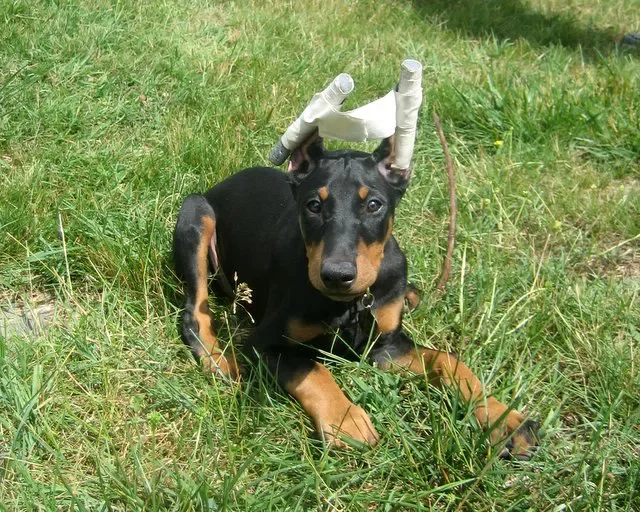
In order for the ears to heal in the desired upright precision after surgery, they must be “posted” to a hard surface and taped until completely healed. Bandages need to be changed weekly, typically. The entire process can last from 4-8 weeks.
Dog Breeds With Cropped Ears
There are numerous breeds of dogs that can sport cropped ears. Usually, these breeds have a standard look that is part of the breed’s history.
Boston Terrier
Boxer
Doberman Pinscher
Miniature Pinscher
Great Dane
Schnauzer
One common reason given in support of the ability to have a dog’s ears cropped is to preserve traditional purebred standards.
Is Ear Cropping Right or Wrong?
Ear cropping is a topic that crosses many different groups that are involved with dogs, from breeders to veterinarians, and those who show dogs to animal rights activists. There are varied opinions on this subject, most of which are subjective.
The American Veterinary Medical Association (AVMA) policy is that they "oppose ear cropping and tail docking of dogs when done solely for cosmetic purposes."2 Their policy has been in place since 1999 and was affirmed as recently as 2012 when the AVMA added that they “encourage the elimination of ear cropping and tail docking from breed standards”. (AMVA, nd)
However, the American Kennel Club (AKC) "recognizes that ear cropping, tail docking, and dewclaw removal, as described in certain breed standards, are acceptable practices integral to defining and preserving the breed character and enhancing good health." They emphasize that dogs with natural ears are not prohibited from entering dog shows. More and more “natural” dogs are being successfully shown, according to a Westminster spokesperson. (Pagan, pets.webmd)
Ear cropping is banned in the United Kingdom3 and Australia4 and in many European countries. Animal rights activists consider this procedure to be unnecessary and a violation of an animal’s rights. Those who support the practice tout breed preservation, breed standards, and health concerns as reasons to allow the procedure to remain an owner’s decision. (Goldman, NAIA)
Risks of Ear Cropping
As with any surgical procedure, there are risks involved. Normal concerns with using anesthesia on animals as well as the possibility of post-surgical complications are included in the risks.5 Cropped ears can become infected, continue bleeding, cause the animal pain from sensitivity or phantom pain, and the success of surgery is never a guarantee. In some extreme cases, the dog’s cropped ears could become so infected, amputation is needed which comes with an entirely separate list of complications.
Reasons behind cropping dogs' ears appear to be purely cosmetic. Although the prevention of ear infections (Canine Otitis Externa) is often cited as a benefit of ear cropping, there is no research data that supports that claim6. Please consult with a vet before considering this procedure.
Should I Have my Dog’s Ears Cropped?
Cosmetic reasons for ear cropping are not widely necessary for showing dogs, or even for breeding dogs. Research the fields you and your dog will be involved in to determine if this surgery is even needed. It is definitely an additional expense and health risk from the surgery. The healing process will require time and attention on your part and multiple veterinary visits to ensure proper care of the cropped ears.
Being an informed pet owner and consulting with an experienced and trusted vet will allow you to make the best decision for your dog.
If you suspect your pet is sick, call your vet immediately. For health-related questions, always consult your veterinarian, as they have examined your pet, know the pet's health history, and can make the best recommendations for your pet.






Leave a Reply
Your email address will not be published.