





Key Takeaways
Hole-in-the-head disease (HITH) causes erosive pits in fish and is primarily an aesthetic issue but can lead to secondary infections.
Stress, poor water quality, nutritional deficiencies, and activated carbon use are key factors contributing to HITH.
Prevention includes proper quarantine protocols, regular tank maintenance, a healthy diet, and minimizing stress among tank inhabitants.
Hole-in-the-head disease (HITH), also known as lateral line erosion, is a common disease in both freshwater and saltwater fishes. HITH causes erosive pits in the head and face that are not life-threatening but can lead to secondary infections. Among saltwater fish, angelfish, tangs, and surgeonfish are particularly vulnerable to HITH.
Although there is no specific cause or treatment for this disease, good basic husbandry practices and a low-stress environment can help prevent its occurrence.
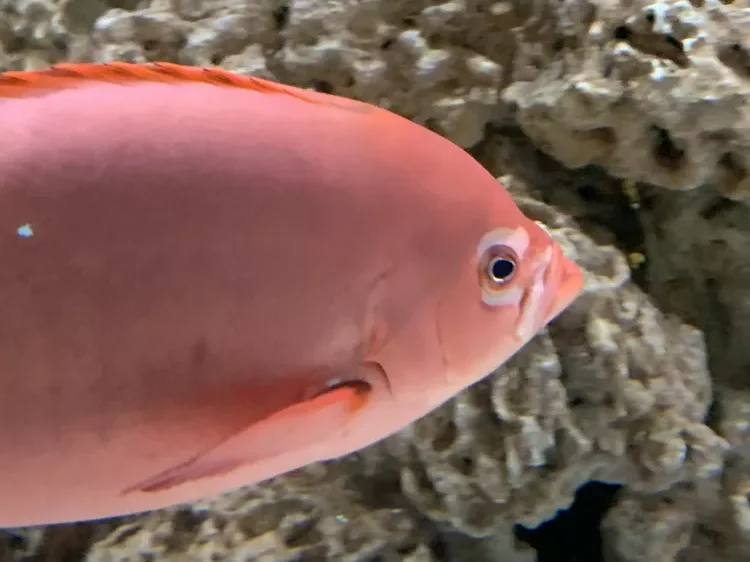
Pacific Creolefish (Paranthias colonus) with hole-in-the-head disease.
What Is Hole-in-the-Head Disease?
Hole-in-the-head disease is an unpleasant looking condition in which eroded pits or holes form on the head, face, lateral line, and (less commonly) the whole body of a fish. HITH is mainly an aesthetic problem, but it can lead to secondary infections of bacteria and parasites.
Lateral Line
The lateral line is a specialized organ in fish that allows them to sense vibrations in the water around them. Made up of a series of connecting channels just below the skin’s surface, this unique organ allows fish to school together, avoid obstructions in their path, and sense when something approaches.
Symptoms of Hole-in-the-Head Disease in Saltwater Fish
As the name states, hole-in-the-head disease is characterized by a "holey" appearance of a fish's head.
Symptoms
Pits (erosions), mainly on the head and lateral line
The pits may be slightly depressed and brown, grey, or white in coloration. Mild cases may only have a few spots, whereas serious infections may start to erode large patches of the face and sides.
Erosions usually start as pinhole size defects and spread outwards. They can start as multiple spots at once or one focal lesion.
Causes of Hole-in-the-Head Disease
There is no singular cause for hole-in-the-head disease, and there are some species of fish that seem predisposed to it, such as angelfish, tangs, and surgeonfish.
Although occasionally caused by a parasite (Hexamitid spp.), this is not commonly the case. Stress seems to be the biggest precipitator because it can lower fish's immunity. Factors that can start the chain of events that lead to hole-in-the-head disease include:
Stray voltage
Stressors including aggression and poor water quality
Nutritional deficiencies
Use of activated carbon
Diagnosing Hole-in-the-Head Disease in Saltwater Fish
Diagnosis of HITH is simply a matter of observing the clinical signs of pitting in the area of the fish's head.
Treatment
There is no specific treatment for HITH. Your veterinarian will narrow down the potential influences and usually suggest a multi-step approach. Anti-parasitic medication and better maintenance practices may be recommended to improve the health of your system as a whole. This may include the removal of all carbon from your system and making sure all of your filters are properly hooked up and not discharging extra voltage.
If aggressive fish play a role in your tank, such as fighting over territory or stealing food out of the gills of other fish, you may need a long-term solution like re-homing these "problem" fish.
Prognosis for Saltwater Fish with Hole-in-the-Head Disease
Although HITH is not fatal, severe lesions may scar such that your fish does not regain its original appearance. Although complete resolution is possible, your fish will likely have some mild color variation in healed patches of skin. Severe lesions may never fully heal.
How to Prevent Hole-In-The-Head Disease
Since the disease is multifactorial, you should keep many different influences in mind when keeping HITH out of your system. Limit the spread of disease in your saltwater tank by following proper quarantine protocols for all new fish, adhering to a regular maintenance schedule, and feeding your fish a healthy diet. Minimize stress by keeping suitable species together and making sure your tank is big enough. If any of your fish start to show clinical signs, they should be moved to a quarantine tank.






Leave a Reply
Your email address will not be published.