







Key Takeaways
Puppies should be dewormed regularly for the first few months of life, typically during scheduled vaccination visits.
Adult dogs generally require annual fecal examinations to check for worms unless on a monthly preventative.
Deworming frequency and medication depend on the type of intestinal parasite and should be guided by a veterinarian.
How often you should deworm a dog depends on their age and whether or not they have worms. Intestinal parasites, commonly referred to as worms, are found in many puppies and adult dogs, and these parasites can be very problematic. Thankfully there are simple treatments to get rid of these pesky parasites and to help keep your dog healthy. Here's how often to deworm a dog or puppy and how to do it.
Types of Worms in Dogs
Many different types of intestinal parasites are found in dogs and puppies. Some of the most common types of intestinal worms include:
Roundworms
Roundworms are spaghetti-like worms that live in the intestines and eat the food your dog eats. Many puppies get these worms from their mothers, but any dog can get them from contact with contaminated soil. Roundworms are found in about one out of every 50 dogs tested with a higher prevalence in dogs that live in cooler places like Alaska, Wyoming, Indiana, West Virginia, Vermont, and Rhode Island.1
Hookworms
Hookworms are tiny worms that feed off blood or tissue from the intestinal walls. The adult worms are difficult to see because they are only a few millimeters long. Puppies may get these parasites from their mothers, but all dogs can catch them by eating larvae in the environment. Hookworms are also found in about 1 out of every 50 dogs tested and are especially common in warmer areas like West Virginia, Oklahoma, Louisiana, Mississippi, and Florida.2
Whipworms
Whipworms are tiny worms with a whip-like appearance that attach to the intestinal walls and feed on blood. Dogs usually contract these worms through contact with contaminated soil. While less common than some of the other worms, whipworms are still found in about 1 out of every 200 dogs tested. West Virginia, Kentucky, and Indiana have some of the highest rates of infection for this worm.3
Tapeworms
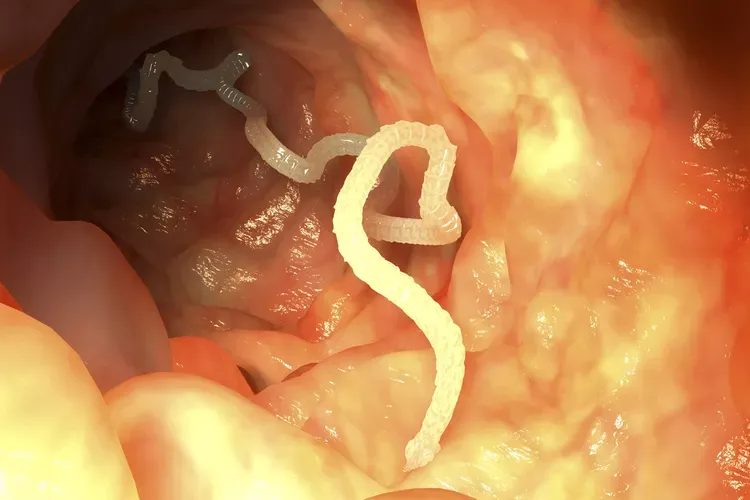
Tapeworms are contracted by ingesting infected fleas. These worms will shed segments that look like pieces of rice on a dog's stool or around their rear end. They can cause rectal itching and weight loss.
Giardia
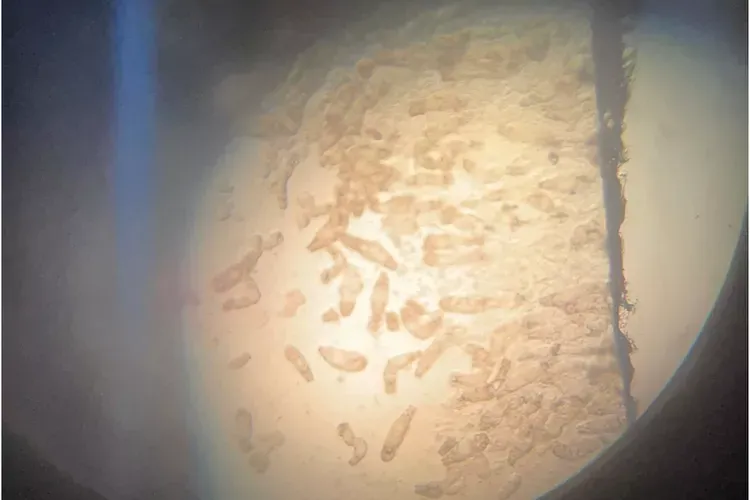
Giardia is a protozoan parasite and not technically a worm, but it still causes intestinal issues. It can only be seen with a microscope. Dogs typically contract giardia from contaminated water or soil.
7 Ways Dogs Can Get Worms
How to Know if Your Dog Has Worms
The best way to tell if your dog has intestinal parasites is by having a microscopic fecal examination done by your veterinarian. Many parasites don't leave visual clues, so fecal tests are generally recommended at least once a year for adult dogs. Heavy roundworm and tapeworm infestations may be obvious due to the presence of visible worms in your dog's poop. Symptoms of worms in dogs may include:
Diarrhea, with or without blood or mucous
Vomiting
Poor appetite
Weight loss
Enlarged abdomen (pot-bellied appearance)
Lethargy/decreased activity
Scooting (more common with tapeworms)
Coughing or gagging
When to Deworm a Dog
If your dog has a parasitic infection, you will need to administer a dewormer at the specific dose and frequency recommended by your veterinarian and the medication packaging. This dose and frequency of deworming will depend on the type of intestinal parasite your dog has and the drug that needs to be used. Some dewormers are given once, but others will need to be repeated several times.
Puppy Deworming
Because puppies often contract roundworms from their mothers, they need to be regularly dewormed for the first few months of life. Most vets will deworm puppies with a medication called pyrantel pamoate (Strongid) at their scheduled vaccination visits, about two to four weeks apart.
Preventive Deworming
Many monthly heartworm preventives also treat for some of the more common worms. To prevent common intestinal parasites, give your dog a monthly preventative that includes a dewormer. Your vet can advise you on the best types of preventions to use in your region.
The 10 Best Flea and Tick Prevention Products, According to More Than 60 Dogs
How to Deworm a Dog
If your dog has intestinal parasites, a dewormer will be needed to kill the parasites. Dewormers can be given orally, applied topically, or injected. There is no single dewormer that will kill all types of worms. To treat intestinal parasites appropriately, your veterinarian will have to determine exactly what kind of intestinal parasite your dog has.
At-Home Treatments
Many pet stores sell oral dewormers without a prescription in liquid, paste, granule, or tablet form to treat an active infection. These dewormers can contain the drugs fenbendazole, praziquantel, pyrantel pamoate, and/or febantel. Different drugs will kill different types of worms and some products contain a combination of two or even three different drugs.
Many pet owners already treat their pets for the most common intestinal parasites with their monthly heartworm and flea prevention, so most adult dogs on monthly preventatives will not need to use these medications. If you do use them, it is important to administer the appropriate amount of these products at the recommended frequency and route to your dog based on its weight.
Always check with your veterinarian before giving any drug in case your specific dog has a sensitivity, allergy, or inability to process the drug based on its genetics or an underlying disease.
Veterinary Treatments
If your at-home treatments are unsuccessful or your dog has an intestinal parasite that cannot be treated with over the counter medications, a prescription dewormer will be needed. These may be administered orally, topically, or injectably and may need to be repeated depending on the type and severity of infection. Giardia is one type of intestinal parasite infection that can be difficult and lengthy to treat.
How to Prevent Worms in Dogs
The best way to prevent your dog from being infected with intestinal parasites is to use a regular parasite preventative. These products are designed to prevent heartworms, kill fleas, and control several types of intestinal parasites on an ongoing basis.
Additionally, don't allow your dog to eat another animal's feces or drink from stagnant water. Some people also avoid dog parks and public places where dogs frequently defecate to avoid ground that is harboring parasites.
Finally, be sure to visit your vet for annual or biannual wellness exams, where they'll do fecal testing to check for the presence of intestinal parasites.






Leave a Reply
Your email address will not be published.