






Key Takeaways
Anchor worms are crustacean copepod parasites common in freshwater fish such as koi and goldfish, and they are visible to the naked eye.
Quarantining new fish and plants before adding them to your aquarium is crucial to prevent the introduction and spread of anchor worms.
Proper removal of anchor worms requires sedation of the fish and potentially veterinary intervention, and secondary bacterial infections may need treatment with prescribed antibiotics
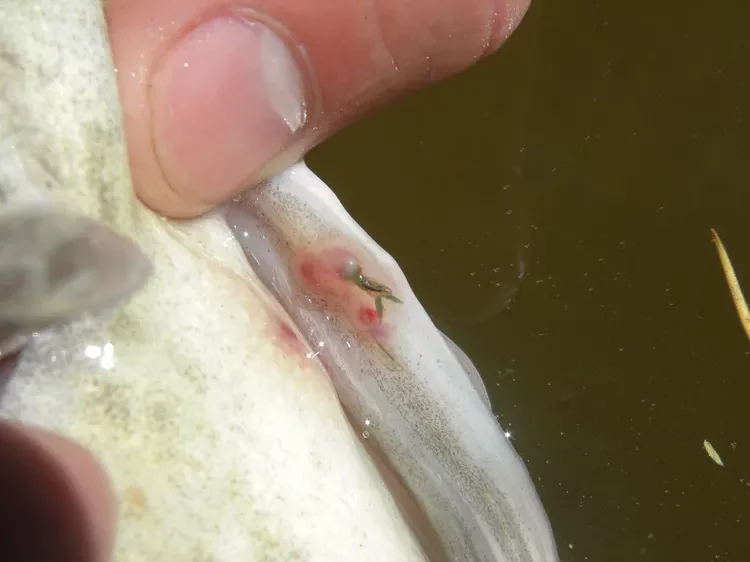
Anchor worms are macroscopic parasites, meaning they can be seen by the naked eye. They are commonly found on koi and goldfish, but can be found on many freshwater fish species. The "worm" part extending out of the fish's skin into the water is actually the female reproductive structure. Treating these parasites can be challenging depending on your aquarium setup and the parasite load.
What Are Anchor Worms?
Anchor worms (Lernaea spp.), not true worms, are crustacean parasites. They embed in fish skin and have a worm-like tail. Their head features an anchor-like appendage for attachment. The parasites experience non-parasitic life stages in water. After mating, a female attaches to a fish to mature into an adult. The name "worm" originates from the extending reproductive structure. Juvenile anchor worms swim free in aquariums, posing no threat initially.
The Lernaea genus of copepods infects most freshwater fish. They are commonly found on goldfish and koi. There are other similar genera of copepods that infect other freshwater and marine fish.
Symptoms of Anchor Worms in Fish
Anchor worms are visible freshwater parasites. Below are noticeable signs of an anchor worm infestation.
Symptoms
Visible worms on scales
Oral cavity problems
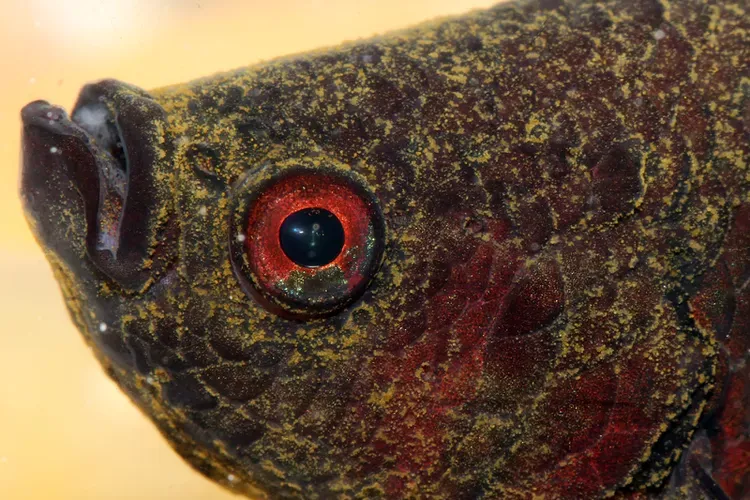
Skin patches and red lesions
Visible Worms on Scales
Female reproductive structures look like short white worms emerging from scales. The ends of these "worms" may have one or two attached egg sacs, which drop and hatch in the aquarium.
Oral Cavity Problems
Anchor worms may also inhabit the fish's oral cavity, creating a "baleen" appearance, which resembles the long teeth seen in baleen whales.
Skin Patches and Red Lesions
Dislodged worms can cause patches of hemorrhage or fibrosis. Bacteria may infect these areas, leading to red lesions on the fish's skin.
Causes of Anchor Worms
Anchor worms are contagious among fish and occur when a new fish is added to an aquarium carrying juvenile anchor worms or a reproductively-active female in their skin. Skipping proper quarantine makes this parasite spread very rapidly. A single female anchor worm can produce hundreds of larvae every two weeks for up to 16 weeks in a 77 degrees Fahrenheit aquarium.
Juvenile anchor worms can spread via live plants. Even if not directly on the plants, free-swimming juveniles might reside in the surrounding water. Without proper quarantine, aquatic plants can introduce various bacteria and parasites. Quarantining plants in a plant-only system can disrupt the parasite life cycle due to the lack of hosts. Plants never kept with fish are free from fish diseases but may carry pests like snails.
Diagnosing Anchor Worms in Fish
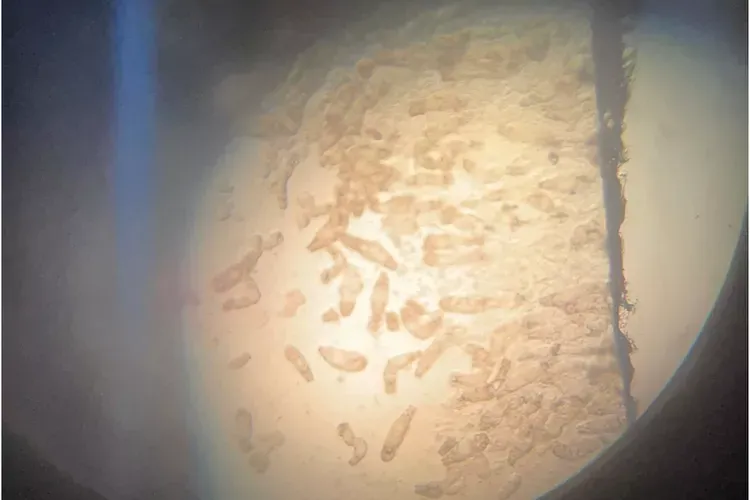
Because anchor worms are external, you or a veterinarian can visually diagnose them. Look for slivers or threads hanging from the fish, which are distinguishable from algae or plant debris. A veterinarian can use a microscope to confirm an infestation.
Treatment
Prompt treatment is crucial as anchor worms can multiply and damage gills, hindering fish respiration. Avoid pulling worms off yourself. A vet should remove them with the fish under sedation, ensuring the full parasite, including its feeding end, is extracted. Sedation minimizes stress and enhances the vet's ability to work efficiently.
After removing adult females, juvenile stages may persist. Over-the-counter treatments are typically effective against juveniles but do not eliminate adults. To reduce free-swimming juveniles, consider removing the substrate and decor and using UV light on the aquarium water.
Treating anchor worms with organophosphates or diflubenzuron (dimilin) is effective but requires caution. Use only veterinary-approved products, keep them away from pets and children, and wear protective gear like gloves when handling these medications.
Prognosis for Fish With Anchor Worms
Monitor attachment sites for secondary bacterial infections post removal. These sites may need antibiotics based on location and severity. Use antibiotics only under a veterinarian's prescription. Maintaining good water quality deters secondary infections.
How to Prevent Anchor Worms
As highly contagious parasites, anchor worms require careful prevention methods. Proper quarantine of any new aquarium additions is crucial. If a tank contains fish with anchor worms, assume all fish are infested. Juvenile larvae are microscopic and can go unnoticed until widespread. Quarantine new fish to prevent spreading anchor worms and other diseases in your main aquarium.






Leave a Reply
Your email address will not be published.