






Key Takeaways
Properly identify whether you have detritus worms or planaria to determine the correct solution.
Overpopulation of detritus worms signals poor tank conditions, which can be resolved with cleaning and proper care.
Planaria worms are harder to eliminate and need chemical treatments, but misuse can harm fish and invertebrates.
If you have noticed tiny white worms in your fish tank, you likely have one of two issues to address. The more common worm, the Detritus Worm, is found in many aquariums, and any overpopulation can be fixed with proper maintenance. The less common Planaria worms are a more complex problem.
Before making any changes to your tank, be positive about which white worm you're dealing with. Only then can you know if your tank needs a good cleaning or if you should use a dewormer. Misinformation about the correct use of dewormers and overuse of dewormers often leads toharming orkilling fish by mistake.
What Are Detritus Worms?
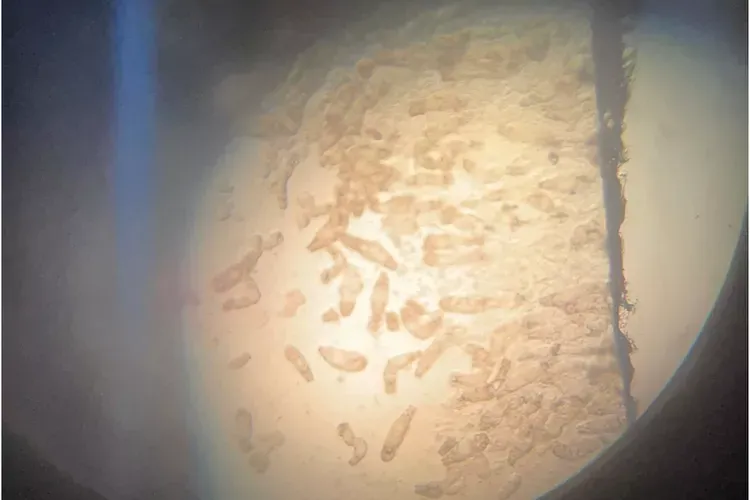
Detritus worms are annelid worms; this is the phylum that includes the segmented worms such as earthworms, tubifex worms, and leeches. They look like thin, pointy, white-brown strings that wiggle through the water and between pebbles. Detritus worms are detritivores, meaning that they only eat decomposing plant and animal waste material; they will not harm your fish.
It is not uncommon for an aquarium to have detritus worms, as they can be introduced through a variety of means. For instance, they may have come in with a new fish or plant and may even have been present in any gravel swapped in from another tank.
Quite often, detritus worms are not even seen. They tend to live in between the pebbles of gravel where they eat the debris left over from feeding or deposited by your fish. You may only notice them when they get sucked up when cleaning the substrate witha gravel vacuum. Detritus worms may actually be a beneficial symbiotic organism in your aquarium, as they help to keep your substrate clean.
Warning
When treating your tank with dewormers or chemical treatments, it's crucial to adhere to the manufacturer's recommended dosage and handle products with care to avoid harming or killing fish. Misuse of these products can lead to significant problems in your tank.
Causes of Detritus Worms
When you see detritus worms coming out of the gravel frequently, that means a problem has occurred in your tank. It can be shocking when your normally clean water becomes filled with hundreds, if not thousands, of tiny white worms, especially if you don't know what caused the bloom. But it is important to not treata detritus worm issue with de-wormers or any medications; these will not take care of the problem and may cause an inadvertent fish kill.1
An overabundance of annelid worms can occur when aquarium maintenance has been lacking. Insufficient cleaning schedules or overfeeding of fish can cause detritus worms to reproduce rapidly and become a nuisance. Reduced dissolved oxygen or low pH levels (both are symptoms of unclean water) will cause detritus worms to seek more oxygen. The worms will flee their gravel home, traveling up the water column toward the surface.
How to Get Rid of Detritus Worms
Worm removal begins by giving your tank a thorough cleaning. Use a gravel vacuum and change the water to remove the majority of the detritus worms and also their food source. Secondly, be sure to check your filtration system for any issues. As proper waste removalis required to keep worms at bay, a well-maintained filtering system is essential to their prevention.
Going forward, regularly clean the substrate, review your feeding practice, and check that your aquarium is not overstocked with fish. Ensure that they are getting enough proper food without overfeeding, which creates too much waste.
What Are Planaria Worms?
Planaria (singular, planarian) worms are not as common as detritus worms, but they are much harder to remove. These are flatworms; most are brought in with pond plants, especially if acquired from a local pond or natural water source. If you've introduced those recently and then noticed white flatworms, chemical treatment is required.
Planaria are flatworms in the class Turbellaria; they are found in both freshwater and saltwater environments all over the world They are quite small, but if you can examine them closely enough, you'll see eyespots as well as protrusions on both sides of their widened heads. Quite often, these are the worms that are crawling across the glass inside an aquarium.
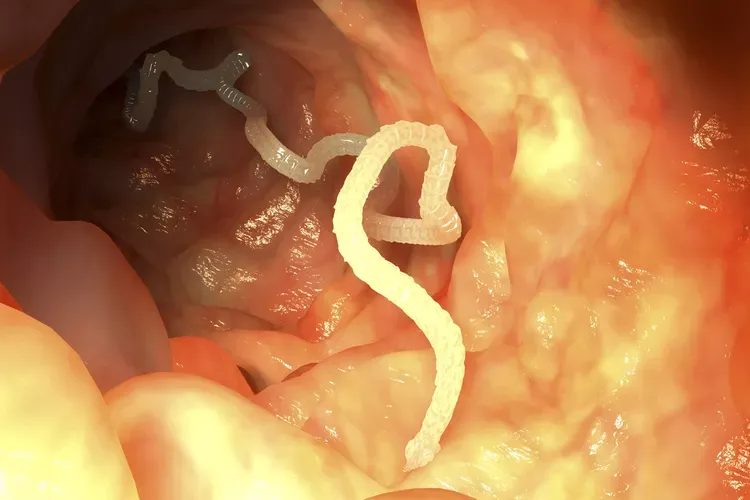
They are related to flukes and tapeworms, andare evolutionarily more ancient than the Annelid Worms (which are not "flat" worms). These ancient worms are asexual animals, meaning they can reproduce without mating. Even after cutting one into pieces, a new worm willform from each piece.
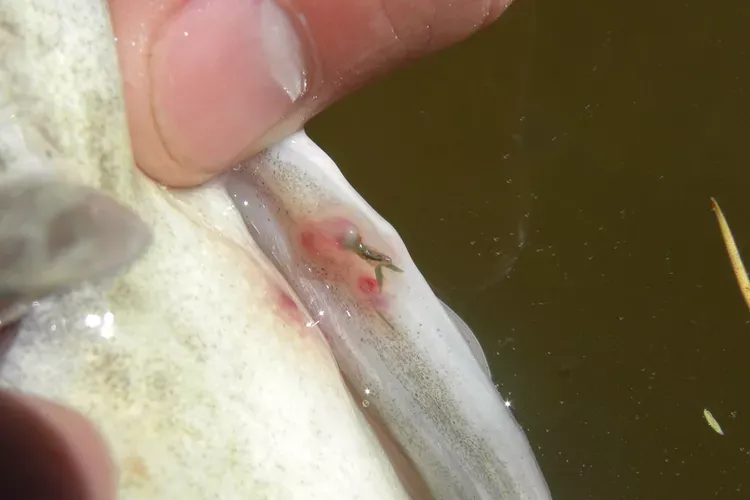
What makes these worms problematic is that they are both scavengers and carnivores. Although they will not harm your healthy fish, they love to feast on fish eggs and therefore are dangerous if you are breeding egg-laying fish. They may also prey on gills and eyes of weakened adults.2
Causes of Planaria
If you do indeed have a planaria problem, it's a serious issue. While detritus worms can number in the thousands, Planaria troubles are often caused by just a few flatworms that are difficult to locate. This is why getting rid of planaria requires chemical treatments. But as chemicals may also harm your fish population, you'll want to be absolutely sure of the presence of planaria before seeking the solution.
How to Get Rid of Planaria
Thoroughly research each of the following chemical products before using them to predetermine if they will be safe for your species of fish. Vulnerable invertebrate species like snails and shrimp should be removed. Sharks, silverfish, lionfish, piranhas, bottom feeders, and certain scaleless and Metynnis fishes may also be sensitive to some worm eradication treatments.3 Any worms on these fish must be removed manually using blunt tweezers, or with a quick salt or freshwater dip.
With all dewormers, be sure to use the exactrecommended dosage from the manufacturer. Too much can cause a fish kill. Also, these products require strict adherence to safe handling instructions. The recommended dewormers for killing Planaria include:
Praziquantel, such as in Fritz Aquatics PraziCleanse or Hakari PraziPro.
Fritz Aquatics Clout containing trichlorfon, which can be toxic if overdosed.
API General Cure which is a combination of medications.
Levamisole HC is a general dewormer, though it should be used with caution and may not be as effective as other options.
All these products can be found at American Aquarium Products, which also has information about their safe handling and application.






Leave a Reply
Your email address will not be published.