




Key Takeaways
Cheyletiellosis is a highly contagious skin condition in cats caused by Cheyletiella mites, often called "walking dandruff."
Treatment involves addressing both the infested pet and its environment, with all household pets requiring simultaneous care.
Though humans are not natural hosts, Cheyletiella mites can cause temporary itching and rashes that resolve within weeks.
Cheyletiellosis, caused by skin-biting mites, is an irritatingly itchy condition in cats. Infestation with Cheyletiella mites is sometimes called "walking dandruff" because the movement of the mites among a cat's flaky fur gives the impression that the dandruff is alive and moving.1 In addition to itching and flaking, cats with cheyletiellosis may have red, bumpy skin. Treatment is necessary to eradicate the mites and halt the skin damage and discomfort they inflict.
Though humans are not a natural host for this parasite, Cheyletiella mites can happily live on humans for a few weeks, causing an itchy rash.
What Is Cheyletiellosis?
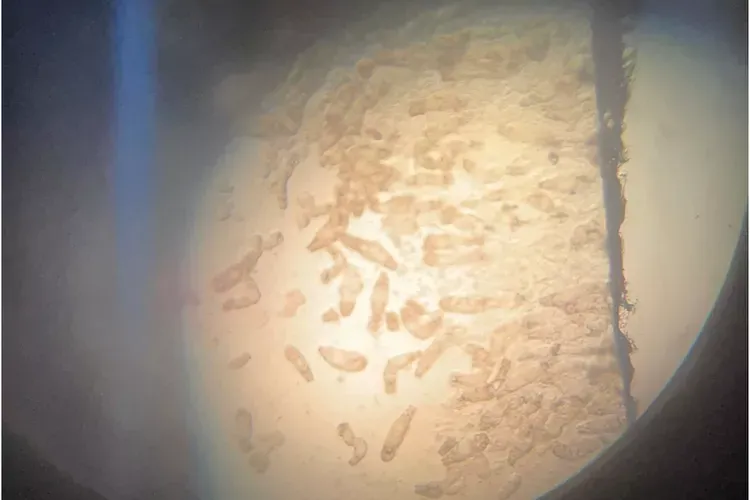
Cheyletiellosis is an infestation of a cat's skin and coat by mites from the Cheyletiella genus. The adults are about 0.385 millimeters long. They have eight legs and, instead of claws, they have comb-like structures. The mites live on the skin's keratin surface and do not burrow into the skin. Cheyletiella have a 21-day life cycle on a host and cannot survive without a host for more than 10 days.
Symptoms of Cheyletiellosis in Cats
The symptoms of cheyletiellosis vary in severity, depending on the sensitivity of the cat.
Symptoms
Scaling of the skin (dandruff)
Scratching (itchiness)
Reddened skin
Small bumps on the skin
Scabs from scratching
Mild hair loss2
The characteristic scaling (or flakiness), bumps, and redness are most prominent along a cat's back and sides, though the cat may scratch and chew other areas.
Hair loss is not a major sign of cheyletiellosis as it is in other parasitic skin conditions like mange, but scratching will increase thin and bald patches.
What Causes Cheyletiellosis in Cats?
Cheyletiella mites are generally contracted during direct contact with an infested animal.1 This situation is most likely to occur in environments such as:
Pet shelters
Catteries
Feral cat colonies
Both the mites and eggs can survive for a short time (about 10 days) in the environment, so infestations can be contracted from bedding, toys, furniture, or other objects harboring the mites.
How Do Vets Diagnose Cheyletiellosis in Cats?
Occasionally, Cheyletiella mites can be seen moving about on the skin, but they can often be difficult to find. Scrapings of the skin or samples of dandruff caught on sticky tape or gathered by a fine comb can be examined for the presence of the mites or their eggs.1 Mite eggs can also be found in fecal samples because they are swallowed during self-grooming.
If neither mites nor eggs can be identified, then a veterinarian may have a "gut feeling" about the presence of Cheyletiella based on the signs and symptoms. Experienced vets' instincts can be valuable when traditional diagnostic techniques come up short. Trial treatment is a good way to confirm or rule out cheyletiellosis before moving on to investigate other causes of skin problems, which can also be difficult to diagnose.
Treatment for Cheyletiellosis
There are several options for treating cheyletiellosis, and your vet will recommend a treatment appropriate for your pet and household situation. In addition to treating the pet, the household environment (floors, bedding, toys, etc.) must be treated as well. All pets in the home should be treated at the same time, as it is possible for them to carry Cheyletiella mites without showing symptoms. Treatment options include:
Selamectin (brand name Revolution), a topical parasite preventative
Milbemycin (brand name Interceptor), an oral parasite preventative
Ivermectin, a broad-spectrum parasite medication that can be given orally or by injection
Topical sprays, shampoos, and dips (e.g. pyrethrin-based products or lime-sulfur dips)
Follow your vet's advice on which products to use for cats and for applying these products safely. These treatments are time-consuming and if mites take refuge in the nasal passages, topical treatments will not be as effective as the above medications, which are absorbed into the body.1
Prognosis for Cats with Cheyletiellosis
Cats that receive a proper course of treatment recover from cheyletiellosis in a matter of weeks. Remember, the cat's environment must also be treated to eradicate the infestation.
How to Prevent Cheyletiellosis
Cheyletiella mites are not common in the United States, so it is unnecessary to target a preventative plan based on these parasites in particular. Well-tended pet cats rarely become infested with mites other than ear mites, and standard flea preventatives should ward off most common parasitic pests.
Avoiding crowds of poorly kept cats is an obvious preventative measure, but if you adopt a kitten or cat from such an establishment, watch for signs of mites as well as other infections so that they can be treated early.
Is Cheyletiellosis Contagious?
Cheyletiella mites are contagious to other cats, dogs, rabbits—and humans. During an outbreak, all animals in a household must be treated (even if asymptomatic) to make sure there are no lingering mites that can re-infest your pets.
People are not natural hosts for Cheyletiella, meaning the mites cannot complete their life cycle on human skin and so the infestation is self-limiting. Symptoms of itching and red bumps on people should resolve within three weeks if all other mites are cleared from the household and pets.
If you suspect your pet is sick, call your vet immediately. For health-related questions, always consult your veterinarian, as they have examined your pet, know the pet's health history, and can make the best recommendations for your pet.






Leave a Reply
Your email address will not be published.