





Key Takeaways
Hyposalinity, or reduced salt levels in water, is an effective treatment for marine fish parasites during their free-swimming phase.
Hyposalinity should never be used in reef tanks, as it is lethal to corals and delicate invertebrates.
Quarantine tanks with hyposalinity can prevent parasite reinfestation and protect new fish before introducing them to the main aquarium.
Hypo means "below" and saline/salinity "containing salt," therefore hyposalinity in simple terms means a lower amount of salt is in the water than what is in seawater.1 The salinity of seawater can be measured as Specific Gravity (SG) using a hydrometer or refractometer. Specific gravity is the measurement of thedensity of liquids compared to pure water, which has a specific gravity of 1.000. With the salinity level of oceans and seas around the world averaging around 1.024 specific gravity, lowering the amount of salt in the water by a few points might be called hyposalinity. However, when it comes to saltwater aquariums, hyposalinitymeans bringing the salt content down to a range of 1.010 to 1.013 SG to be effective for parasite control. When reducing the salinity, be sure the pH and temperature of the water do not differ from the current water conditions for the fish.
The Effects of Hyposalinity
All marine creatures require water (as we also do) to survive, they just process it differently. BBecause marine fish's body fluids are less salty than the water surrounding them, water is constantly leaving their bodies by osmosis through the gills or skin, so they ingest sea water through their mouth to prevent the loss of needed fluid within the body. Marine fish eliminate the salt molecules through special glands in the gills, and retain the freshwater to maintain their body fluids with a lower salinity (about 0.9%) than the seawater, which is about 3.5% salinity. When the salinity of seawater is lowered, creatinghyposalinity, the decreased osmotic pressure of the water causes tissue cells to expand with water, thus the related name: osmotic shock therapy (OST).
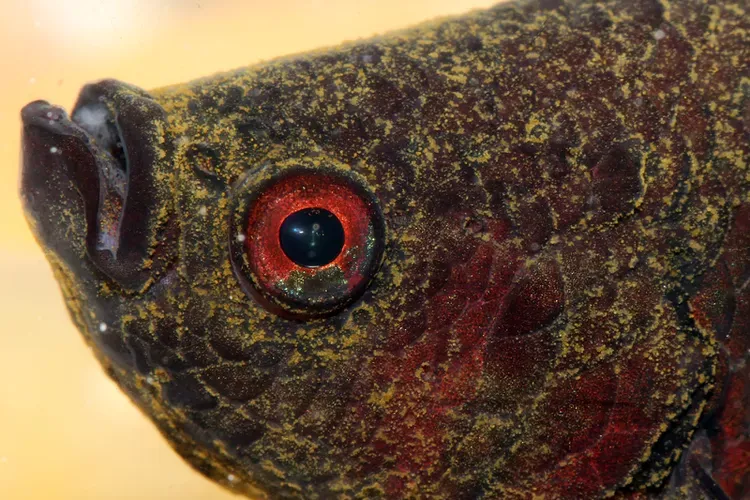
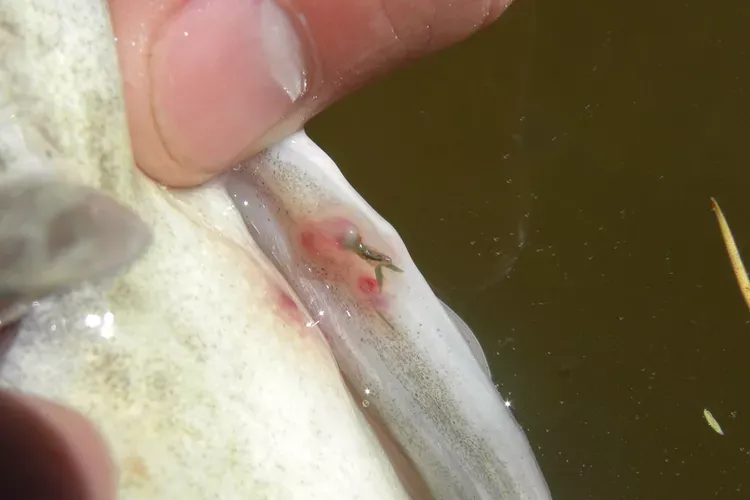
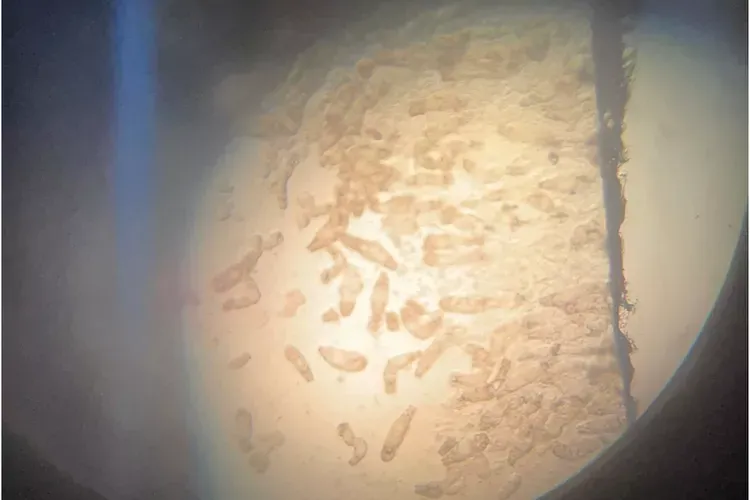
Fish and a few other sea creatures can withstand and adjust to this change in osmotic pressure, but protozoa(White Spot Disease, and Clownfish Disease), dinoflagellate (Velvet or Coral Fish Disease), and flatworm (Black Spot Disease) organisms cannot. Reducing this osmotic pressure, particularly rapidly, will cause them to take in water and they literally explode! This is why hyposalinity is a good treatment for marine fish parasites. Be aware, however, that delicate corals and invertebrates may not immediately rupture as the parasites do, but these marine animals cannot tolerate exposure to low osmotic pressure, which could result in a rather quick death.
When Hyposalinity Is Most Effective
Hyposalinity is largely ineffective on mature marine ich parasites that are well protected within the gills or skin, surrounded by epithelial cells and thick mucus produced by an infested fish. This occurs when they are embedded deep in the tissues of their host during the feeding stage, and during the final encysted replication stage. It is primarily during the free-swimming phase of their lifecyclewhen new organisms are released from a mature cyst, and before they have the chance to attach and develop into mature parasites, that they are most vulnerable and can be eliminated with hyposalinity.
Applying hyposalinity or osmotic shock therapy to treat parasite problems is a personal decision one has to make. However, it is often safer to use than the medications that are added to the water to treat parasites on fish.
Quarantine Tanks
Treating fish in a quarantine tank (QT) with lower salinity can help prevent new ich organisms released by mature cysts from reinfecting the fish during the quarantine period.
As a preventative measure, place new fish brought home in a QT for several weeks of observation before introducing them into the main aquarium. Use hyposalinity for part of the time during quarantine to reduce the parasites on the fish.
Fish-Only Tanks
Under the following situations, it is recommended to at least remove and give all exposed fish a freshwater dip, which is a short hyposalinity treatment. This is preferably in combination with at least a one-time appropriate medical treatment before placing the fish back into the main aquarium (at which point the salinity is lowered for 3 to 4 weeks). Use a freshwater dip when:
A QT is not available, or the choice is made not to treat ich infected fish in one.
You don't want to leave their aquarium empty with no fish to look at for a month.
There is a concern or you want to lessen the possibility of re-infestation occurring after the fish have been treated in a QT and returned to the main aquarium.
Re-infestation does occur after the fish have been treated and returned to the main aquarium.
Reef Tanks
Hyposalinity should NEVER be used in a reef tank, as it will kill corals and delicate invertebrates. Since most people in all likelihood will not want to disturb these animals, not to mention the hassle of removing them and setting up another tank to put them in, the easiest way of treating a reef tank is to leave it devoid of all fish for at least 4 weeks and allow the marine ich to run its life cycle and die off, while treating all the fish in the Quarantine Tank.






Leave a Reply
Your email address will not be published.