


Bloodshot eyes in humans are a sure sign that something isn’t quite right with our eyes, whether it’s an infection or injury, and the same goes for our dogs. While the problem with your dog's eyes could be a variety of things, it’s important to contact your vet as soon as possible when you notice something amiss, or else you could risk damage to your dog’s vision.
Here are some of the most common reasons why your dog’s eye is crusty, goopy, or red.
1. Dry Eye in Dogs
Tears are essential to your dog’s eye health, so a lack of them is certainly cause for concern. Dry eyes can be extremely uncomfortable for your dog if not properly treated, and in some cases, may even require surgery to correct.
The most common type of dry eye is caused by your dog not producing enough tears, or, in fewer cases, because your dog’s tear quality is too poor to provide their eyes with the care they need. Dry eye may be something your dog was born with, or it may develop in adulthood, but without the proper treatment, dry eye can lead to complications like corneal ulcers or recurring infections.
Dry eye in dogs is typically treated with ongoing eye drops for dogs, such as these Remend BioHAnce Dry Eye Drops for dogs, which they may need throughout their life if their breed is one that’s prone to dry eye.
2. Conjunctivitis in Dogs
Did you know that dogs have a third eyelid? And much like their other eyelids, this one is covered by a membrane called the conjunctiva, which shouldn't be easy to spot, but if it is, you’ll notice it’s pale pink in colour.
If a dog has conjunctivitis, then the conjunctiva tissue will appear inflamed and red. Other symptoms of conjunctivitis in dogs include:
Discharge from the eye
Squinting or excessive blinking
Sneezing or coughing (sometimes)
There are multiple causes of dog conjunctivitis (including breed-related conditions, viral infections, and bacterial infections), so you should contact your vet as soon as possible if you notice another of the above symptoms of conjunctivitis in dogs to ensure there isn’t a greater underlying issue.
Dog Conjunctivitis Treatment
Once a diagnosis has been confirmed by your vet, they will prescribe the most appropriate form of treatment depending on the underlying cause. This may include antibiotic tablets or eye drops for dog conjunctivitis.
3. Glaucoma in Dogs
Dog glaucoma is a type of eye disease whereby the pressure in the eyeball rises due to poor drainage of aqueous fluid (the fluid that allows the eyeball to keep its shape). Without the proper treatment, glaucoma can cause damage to both the retina and optic nerve, resulting in vision loss.
The key signs of glaucoma in dog eyes are:
Pain in the eye (squinting, rubbing the spot)
Watery discharge
Swelling or bulging of the eyeball
Bloodshot eyes
Cloudy or bluish spots in the eye
Depending on the type of glaucoma, these signs may appear rapidly or develop slower over time. Acute glaucoma is a medical emergency, so if you notice something is wrong with your dog’s eye, call your vet as soon as possible to be sure.
Dog glaucoma treatment varies depending on the type of glaucoma and the underlying condition that caused it. Still, the key goal is to reduce the pressure within the eyeball as quickly as possible and ease your dog’s pain and discomfort. This will be decided by your vet at the time of diagnosis.
Surgery may be necessary in advanced or severe dog glaucoma cases to save your dog’s vision or, in some cases, to remove the eye and relieve your dog’s pain.
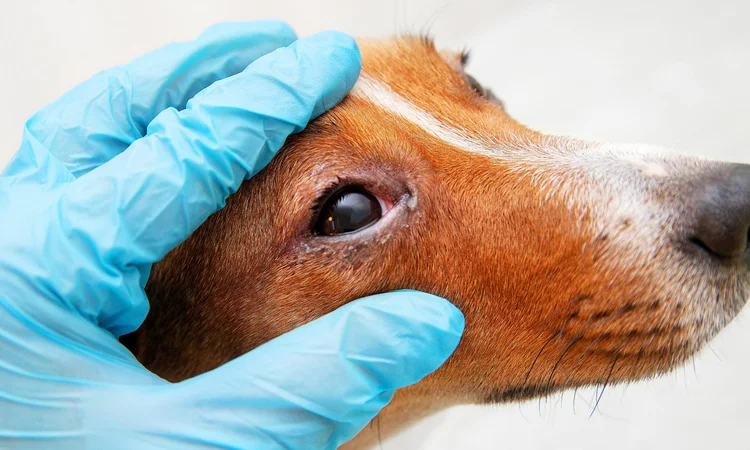
4. Allergies in Dog Eye
Your dog’s eyes are just as sensitive to their environment as a person's, so if you’re noticing their eyes getting red or watering at particular times of the year or after eating, it might be a sign your dog has an allergy.
Dog allergies typically come with some or all of the following symptoms as well:
Sneezing
Coughing
Inflamed or itchy skin
Difficulty breathing
Dog allergy treatments vary depending on the type of allergy. It may be as simple as switching to a hypoallergenic dog food for dog food allergies, but it can be a bit tricker for seasonal dog allergies as pollen tends to get everywhere. In this case, it’s best to get into the routine of cleaning your dog’s eyes with a dog eye cleanser or eye drops, grooming or bathing your dog after a walk, and regularly cleaning your home and your dog’s bedding to eliminate potential allergens.
5. Foreign Object in Dog Eye
We’ve all had something in our eyes at some point, so we know just how uncomfortable or even painful it can be. Unlike us, dogs don’t have the means to get something out of their eyes, so they rely on us to do it for them.
Besides redness, the signs your dog has something in their eye include:
Squinting or closing one eye
Watering
Pawing at their face
Swelling around the eye
It’s important that whatever is in their eye is removed as soon as possible. Even small items can scratch your dog’s eye if they’re sharp or abrasive, which can lead to infection.
Depending on what is in your dog's eye and how quickly you notice, you may be able to clean it out yourself by flushing it with water. To do this:
Position your dog so you can easily see their eye and gently hold their head still with one hand.
Gently hold their eye open with your free hand, just enough for you to see the object.
Check for any damage to your dog’s eye, such as a puncture. If the object is lodged in your dog’s eye, call your vet immediately or get an emergency appointment, and cover the eye with a clean cloth to prevent your dog from pawing at it anymore.
Gently flush your dog's eyes if the item is not lodged using clean, warm (not hot) water until it is removed.
Call your vet immediately if you can’t remove the object by flushing the eye.
You should never use your fingers to try and remove something from your dog’s eye, as they may be carrying bacteria that cause further irritation. Once the object has been removed, monitor your dog’s behaviour to ensure they’re not in any further discomfort or showing signs of an eye infection.
Maintaining your dog’s eye health is an essential part of their routine healthcare, so you should never ignore any signs that something is wrong, even if it’s just a little redness. If you’re looking to optimise your dog's eye health, check out our great range of dog eye care products available from some of the top brands in the industry.




Leave a Reply
Your email address will not be published.